20 Jul 2026
Breath Awareness Practices from Buddhist Texts Applied to Poker Tournament Endgames
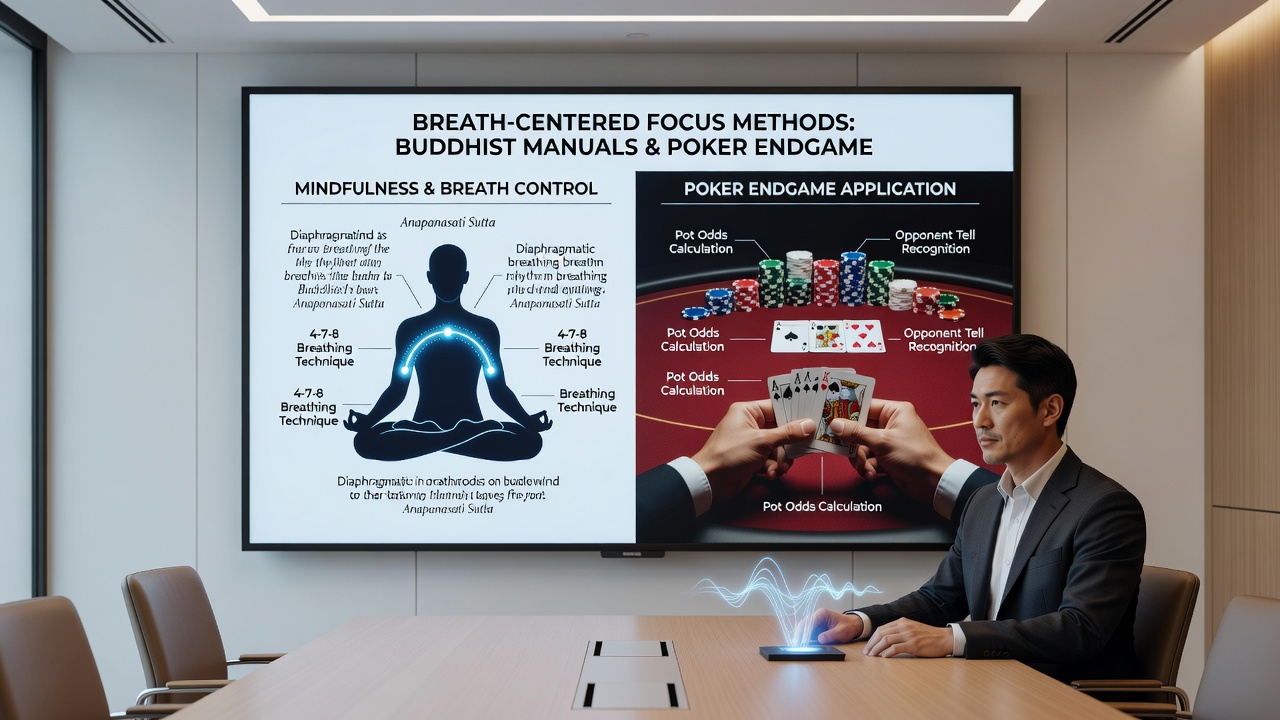
Buddhist manuals such as the Anapanasati Sutta describe systematic training in mindfulness of breathing that practitioners have adapted across centuries for sustained attention under demanding conditions, and observers note these same steps find application in poker tournament endgames where players confront repeated high-stakes choices with limited time.
The core instructions begin with awareness of the breath at the nostrils or abdomen, proceed through sixteen stages that include experiencing the whole body, calming bodily formations, and developing mental qualities such as joy and equanimity, while the method remains grounded in direct observation rather than conceptual elaboration.
Core Elements of the Practice
Those who study the manuals record that the first tetrad focuses on the body, training attention to follow inhalation and exhalation without interference, and this stage alone supplies a stable anchor when a poker player faces an all-in decision on the river with significant chips at risk. Subsequent tetrads shift to feelings, mind, and mental objects, allowing the same practitioner to notice arising tension or excitement and to release it before it influences the next action.
Research published by the National Institutes of Health shows measurable improvements in sustained attention and reduced reactivity after regular breath training, findings that align with the demands of final-table play where each decision compounds previous outcomes.
Mapping the Stages to Tournament Pressure
In practice, a player begins by settling attention on the breath immediately before cards are dealt in heads-up situations, using the natural rhythm of inhalation and exhalation to mark time and maintain presence without scanning for tells or calculating odds in an agitated state. The second stage invites feeling the breath throughout the body, which corresponds to noticing physical posture and muscle tone at the table so that any tightening of the shoulders or jaw registers before it affects betting rhythm.
Further stages train the calming of bodily formations and the generation of joy or equanimity, steps that players apply when facing repeated raises or when stack sizes create asymmetric pressure during July 2026 international events where late-night sessions extend into early morning hours.
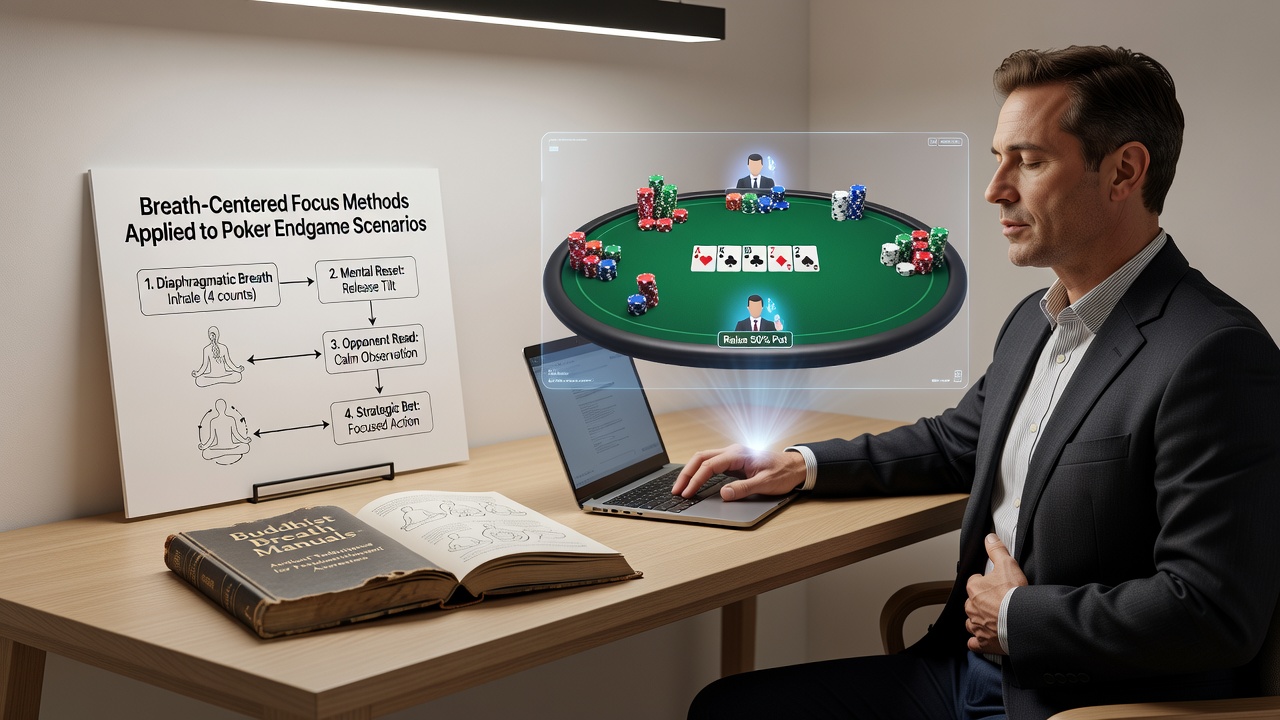
One documented approach involves pausing between hands to complete a short cycle of the sixteen stages, a method that returns attention to the present moment rather than replaying earlier losses or projecting future outcomes, and data from performance studies conducted at the University of Queensland indicate such brief resets correlate with steadier decision quality over extended sessions.
Practical Integration in Endgame Scenarios
During push-fold stages common at short-handed tables, practitioners first establish breath awareness, then observe any arising mental proliferation about opponent ranges without following it, and finally return to the breath before selecting an action. This sequence keeps the decision process anchored in observable data such as stack depths and position rather than emotional momentum.
Case examples drawn from training programs show players completing a single mindful breath cycle immediately after an opponent’s unexpected check-raise, allowing physiological arousal to subside before responding. The manuals emphasize that the breath remains available at every moment, supplying a continuous reference point that does not depend on external conditions at the table.
Supporting Research and Cross-Field Findings
Studies on attention regulation demonstrate that breath-focused training strengthens the ability to disengage from distracting thoughts, a capacity directly relevant when multiple variables including ICM pressure and opponent history must be weighed simultaneously. Observers record that the same qualities cultivated in formal sitting practice transfer to the compressed time frames of tournament play without requiring changes to the original instructions.
Because the method stays within the domain of direct observation, practitioners avoid introducing additional cognitive load during moments when rapid yet accurate assessment determines advancement or elimination.
Conclusion
Buddhist manuals supply a structured sequence for developing breath-centered attention that remains accessible across varied high-pressure contexts, and poker tournament endgames represent one contemporary setting where the same sequence supports consistent presence. Data from independent research institutions continue to document the attention-related outcomes of this training, while players who integrate the stages report the method functions as an internal reference point available between every decision. The approach requires no modification to the original textual instructions, only consistent application within the specific time constraints and information demands of late-stage play.