3 Jul 2026
Breath-Centered Insight Practices Shape Probabilistic Modeling in Strategy Games
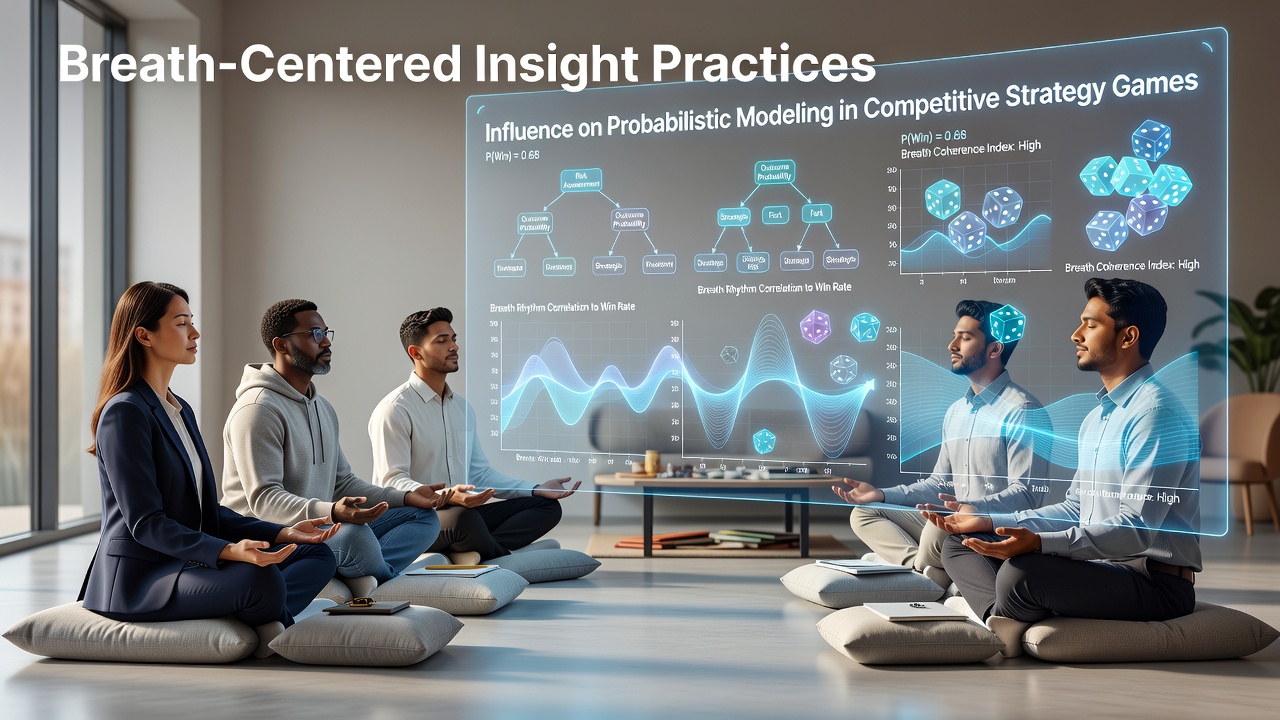
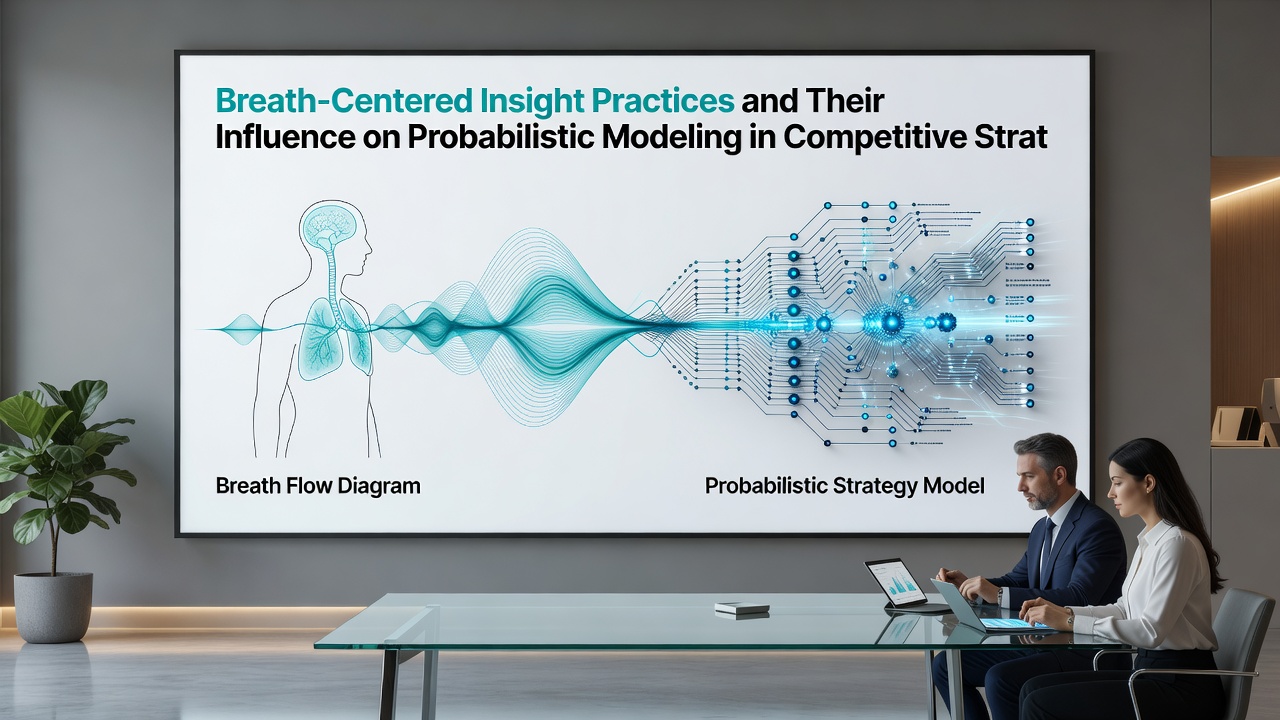
Breath-centered insight practices center on sustained attention to inhalation and exhalation cycles, often paired with systematic observation of mental phenomena as they arise. These techniques appear in multiple contemplative traditions and have drawn interest from researchers examining cognitive performance under uncertainty. Competitive strategy games require participants to assign probabilities to opponent actions, evaluate expected values across branching decision trees, and update beliefs after each new piece of information. Connections between the two domains emerge when studies track how attention training alters performance metrics in such environments.
Core Elements of Breath-Centered Insight Practices
Practitioners typically begin by anchoring awareness at the nostrils or abdomen, noting the duration and texture of each breath without attempting to alter its natural rhythm. As stability develops, attention expands to include bodily sensations, emotional tones, and cognitive processes that accompany the breath. Observers note that this progression cultivates a form of meta-awareness, allowing individuals to register thoughts as transient events rather than fixed truths. Data from neuroimaging studies indicate measurable changes in regions associated with attentional control and error monitoring after consistent practice periods ranging from eight to twelve weeks.
Probabilistic Modeling Demands in Competitive Strategy Games
Games such as chess, Go, and various real-time strategy titles require continuous construction and revision of probability distributions over possible opponent moves. Players assign likelihoods to different lines of play, calculate expected utilities, and maintain running estimates of their own information advantage. Cognitive load increases when games feature imperfect information or simultaneous-move structures, forcing rapid integration of new data into existing models. Research published through academic channels shows that sustained focus and reduced susceptibility to recency bias correlate with higher accuracy in these probability assessments.
Documented Effects on Cognitive Processes Relevant to Modeling
Controlled trials conducted at institutions including the University of Wisconsin-Madison have examined how breath-focused attention training influences working memory capacity and attentional blink thresholds. Participants who completed structured programs demonstrated improved ability to maintain multiple probabilistic hypotheses simultaneously without performance degradation. Additional investigations from the Max Planck Institute for Human Cognitive and Brain Sciences have linked similar practices to decreased activity in the default mode network during tasks requiring sustained strategic evaluation. These physiological shifts correspond to behavioral outcomes such as fewer impulsive deviations from calculated lines and more consistent updating of beliefs after each observed action.
One longitudinal project tracked competitive Go players across a six-month period and recorded session data on move selection accuracy relative to engine-evaluated probabilities. Those who incorporated daily breath-centered sessions showed statistically significant reductions in moves classified as low-probability outliers compared with baseline measurements. Parallel findings emerged in a separate cohort of chess competitors monitored through online platform analytics during the same timeframe.
Integration Approaches Observed in Training Environments
Coaches and performance analysts have begun embedding short breath-observation intervals between rounds or during time-outs in tournament settings. These intervals typically last between three and five minutes and focus solely on registering breath sensations rather than generating strategic content. Reports from the International Mind Sports Association note that such protocols appear in preparation regimens for both over-the-board and digital competitions. In July 2026 several regional federations circulated updated guidelines recommending standardized attention-reset procedures during multi-day events, citing internal performance datasets that linked the intervals to steadier decision distributions across later rounds.
Software tools designed for post-game review now incorporate optional modules that prompt users to log subjective confidence ratings alongside objective probability estimates. When these logs are cross-referenced with physiological markers collected during play, patterns emerge showing tighter calibration between reported and actual likelihoods among practitioners of breath-centered methods. Academic researchers at the University of Sydney have begun aggregating such anonymized datasets to explore dose-response relationships between practice frequency and modeling precision.
Measurement Challenges and Available Evidence
Quantifying the precise contribution of breath-centered practices to probabilistic accuracy remains methodologically demanding because multiple variables influence game outcomes. Randomized controlled designs face difficulties in blinding participants and isolating meditation effects from concurrent training. Nevertheless, meta-analyses published in peer-reviewed journals continue to aggregate effect sizes across attention and decision-making tasks, providing a cumulative picture that supports modest but replicable advantages in sustained focus domains. Professional organizations such as the American Psychological Association maintain publicly accessible summaries of these aggregated findings for researchers seeking baseline comparisons.
Conclusion
Current evidence positions breath-centered insight practices as one factor among several that can support the cognitive operations required for effective probabilistic modeling in competitive strategy games. Physiological and behavioral data converge on improvements in attentional stability and belief updating, while implementation examples illustrate practical integration into existing training structures. Continued collection of performance metrics across diverse game formats will clarify the magnitude and boundary conditions of these effects.