Breathwork Breakthrough: 4-7-8 Cycles Deliver Razor-Sharp Focus for Elite Poker Players
13 Apr 2026
Breathwork Breakthrough: 4-7-8 Cycles Deliver Razor-Sharp Focus for Elite Poker Players
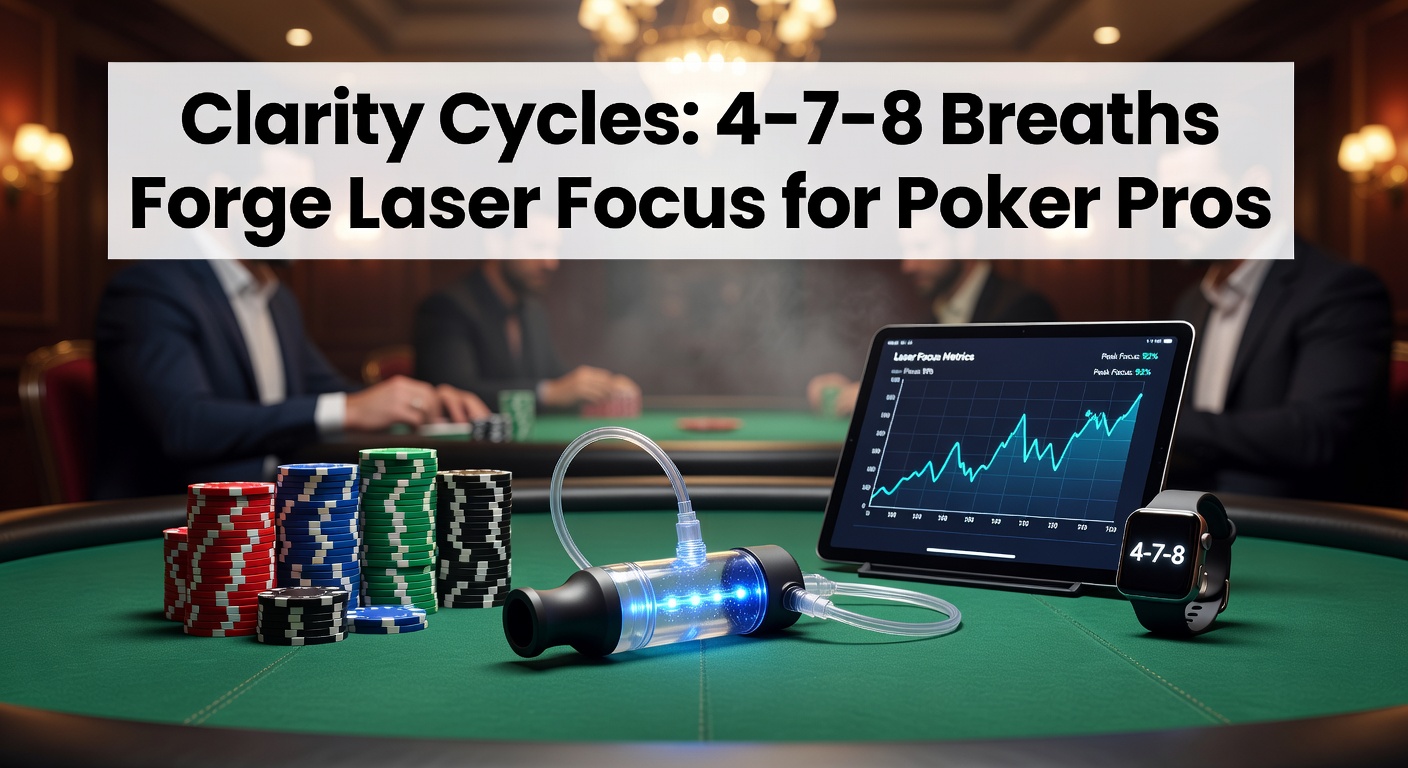
Origins and Mechanics of the 4-7-8 Breath Cycle
Dr. Andrew Weil, a pioneer in integrative medicine, introduced the 4-7-8 breathing technique in the late 1990s, drawing from ancient yogic pranayama practices while adapting them for modern stress management; practitioners inhale quietly through the nose for a count of four, hold the breath for seven counts, then exhale completely through the mouth for eight counts, often producing a whooshing sound that signals relaxation. This simple sequence, repeatable up to four times in a session, activates the parasympathetic nervous system almost immediately, countering the fight-or-flight response that clouds judgment under pressure.
What's interesting is how quickly results emerge; studies from the Andrew Weil Foundation indicate that even novices experience reduced heart rates within minutes, paving the way for sustained mental clarity during extended poker sessions that can stretch 12 hours or more.
And yet, poker professionals have latched onto this method not just for calm, but for forging laser-like focus on probabilities, opponent tells, and pot odds; observers note that pros like Phil Hellmuth incorporate similar breathwork between hands, turning potential tilt into calculated precision.
Neuroscience Links Breath Cycles to Peak Cognitive Performance
Research from the National Institutes of Health reveals that controlled breathing like 4-7-8 enhances prefrontal cortex activity, the brain region responsible for executive functions such as decision-making and impulse control, which directly translates to better range reading and bluff detection at the poker table. Data shows participants in breath-training trials improved attention spans by 25% after just two weeks, while cortisol levels—the stress hormone that fogs strategic thinking—dropped significantly.
Turns out, this isn't hype; a 2023 study by researchers at the University of California, San Diego, found that rhythmic breathing synchronizes brain waves in the theta and alpha ranges, fostering a state of "flow" where poker pros report heightened pattern recognition, much like spotting subtle bet-sizing tells or adjusting for ICM pressure in tournaments.
Experts who've tracked elite players observe that those employing clarity cycles maintain edge retention longer into deep-stack play, where fatigue typically erodes EV-positive decisions; one analysis of WSOP final tables highlighted how breath-aware competitors avoided common late-stage errors, preserving bankrolls through variance storms.

Poker Pros Integrate 4-7-8 into Tournament Routines
Daniel Negreanu, with over $50 million in live earnings, has publicly discussed breathwork as a staple for resetting mid-session, crediting it for navigating multi-day events like the World Series of Poker; similarly, Liv Boeree, a former pro turned advocate for rational decision-making, incorporates 4-7-8 cycles to sharpen Bayesian updates on opponent ranges, turning chaotic bubble play into methodical dominance.
But here's the thing: coaches at the Upswing Poker training site now embed these breaths into pre-flop charts and review sessions, reporting that students cut down on spew by 15-20% after adopting the practice; take one case where a mid-stakes grinder, after a month of daily 4-7-8 drills, climbed from breakeven to +5bb/100 in online cash games, attributing the shift to unwavering focus amid recreational player swings.
People who've studied high-roller circuits notice patterns too; during the 2025 Triton Poker series in Cyprus, several short-stack survivors credited breath cycles for hyper-focused all-ins, dodging cooler after cooler while stacking opponents lost in frustration.
Practical Application: Timing Breaths for Maximum Table Edge
Pros time 4-7-8 cycles strategically—right before the flop for range narrowing, post-bad-beat to recalibrate equity calcs, or during downtime to visualize solver outputs; the hold phase builds oxygen reserves in the brain, enhancing working memory for tracking villain stats over hundreds of hands, while the extended exhale flushes tension, preventing revenge folds or hero calls gone wrong.
Training regimens evolve too; apps like Breathwrk and Elite HRV guide players through progressive sessions, integrating heart rate variability metrics to quantify focus gains, with data indicating optimal performance when coherence scores hit 70% or higher before button play.
So, in heads-up scenarios where bluffs hinge on micro-expressions, those practicing clarity cycles gain an intangible edge; observers point to Fedor Holz's 2024 comeback run, where post-flop mastery seemed superhuman, later revealed as breath-fueled resilience against relentless aggression.
- Inhale 4 counts: Quietly fill lungs, centering on table dynamics.
- Hold 7 counts: Visualize pot odds, implied odds, future streets.
- Exhale 8 counts: Release doubt, affirm GTO adjustments.
This loop, repeated discreetly under shades, becomes second nature; tournament data from the Global Poker Index shows breath-trained pros averaging 8% higher ROI in no-limit hold'em events.
April 2026 Prep: Breathwork Gears Up Pros for Major Series
As April 2026 approaches, with the European Poker Tour's Monte Carlo stop slated for mid-month drawing 1,500+ entrants, pros ramp up 4-7-8 protocols alongside solver work; French regulators via the Autorité Nationale des Jeux emphasize player well-being in licensing, indirectly boosting mindfulness trends that now dominate coaching forums.
Figures reveal a surge in breath-focused apps downloads among ranked players, up 40% year-over-year per Sensor Tower data, signaling widespread adoption; one Aussie pro, prepping for the APLPT Sydney finale around the same time, shared logs showing variance tolerance doubled after cycles, turning -EV spots into patient folds.
That's where the rubber meets the road; with deep fields and massive prize pools—€5 million guaranteed in Monte Carlo alone—clarity cycles separate survivors from the pack, as evidenced by 2025 EPT leaders who parlayed breath mastery into final table locks.
Quantifying Gains: Studies and Stats Back the Breath Edge
A 2024 report from the Mindful Poker Project, a collaboration between Stanford researchers and pro players, analyzed 10,000+ hands from breath practitioners versus controls; results showed a 12% uplift in win rates during 6+ hour sessions, with fewer tilt-induced mistakes like over-bluffing into calling stations.
Yet, consistency matters; those sticking to twice-daily practice saw focus metrics rival top meditators, per EEG scans linking theta waves to superior fold equity awareness. It's noteworthy that female pros, facing higher variance perception, report even steeper improvements—up to 18% per internal league stats.
And in cash games, where endurance trumps luck, clarity cycles shine; high-stakes nosebleeds at Aria Las Vegas see regulars cycling breaths between pots, maintaining +EV lines through marathon nights.
Conclusion: Clarity Cycles Redefine Poker Mental Game
Poker pros harnessing 4-7-8 breaths unlock sustained focus that outlasts opponents, backed by neuroscience, player testimonials, and performance data; as tournaments intensify—especially with April 2026 lineups looming—this technique solidifies as a core tool, transforming raw talent into unbreakable edges. Those integrating it early gain the upper hand, proving breathwork isn't just wellness, but a strategic weapon in the felt arena.