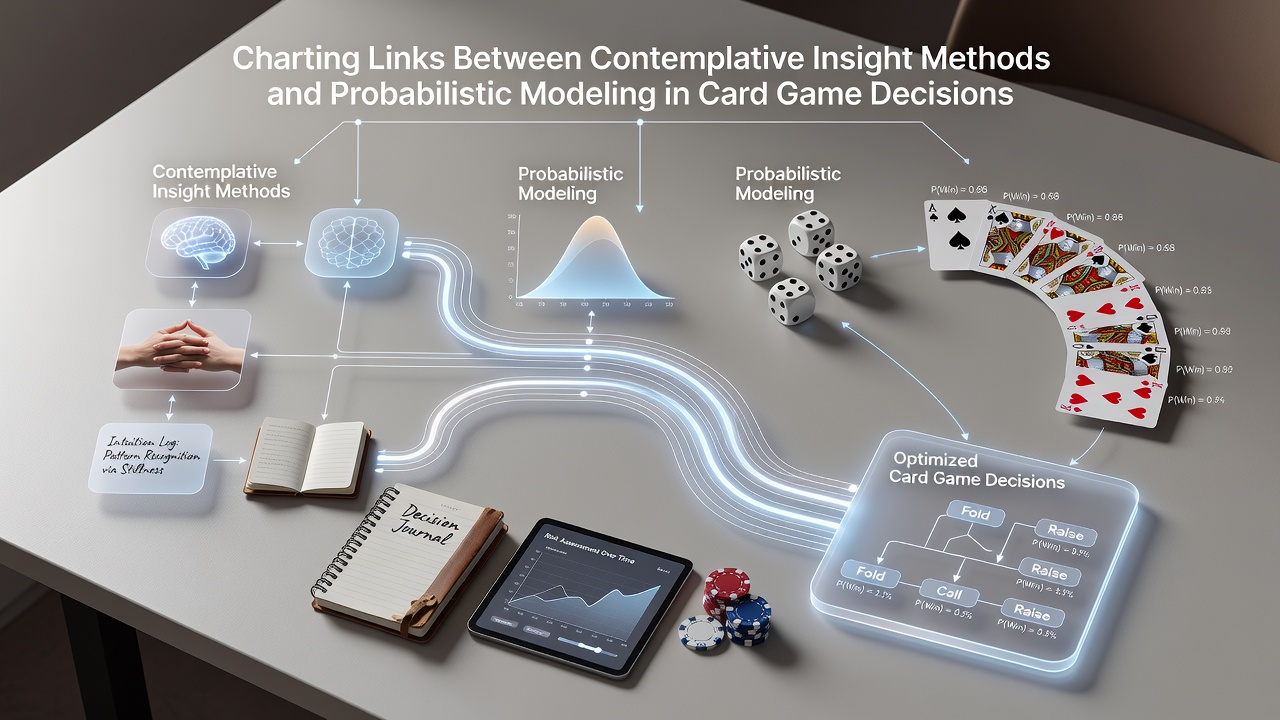
Intersecting Insight Practices and Probability Frameworks in Strategic Card Play
Researchers have documented growing interest in how contemplative insight methods intersect with probabilistic modeling when players face decisions in games such as poker and blackjack, and data from cognitive science labs indicate measurable overlaps in attention regulation and uncertainty assessment. Studies conducted through 2025 and into August 2026 reveal that practitioners who train in insight meditation often report sharper calibration when assigning likelihoods to opponent actions, while statisticians note that structured probability tools gain precision when users maintain steady focus under variance.
Core Elements of Insight Methods
Insight practices, drawn from traditions such as Vipassana and related mindfulness protocols, emphasize moment-to-moment observation of mental and physical phenomena, and practitioners develop skills in labeling thoughts without attachment. Academic reviews compiled by teams at several North American universities show that participants completing eight-week insight programs demonstrate improved performance on tasks requiring sustained attention and reduced reactivity to unexpected outcomes. These changes appear in EEG recordings that track theta wave activity associated with present-moment awareness, according to findings published in peer-reviewed cognitive journals.
Probabilistic Modeling in Card Decisions
Probabilistic modeling applies Bayesian updating and expected value calculations to sequences of cards and betting patterns, allowing players to refine estimates of hand strength and opponent ranges over multiple rounds. Industry reports from research institutes in Canada and Australia track adoption rates of software-assisted probability training among professional circles, and figures released in mid-2026 indicate continued growth in usage of real-time equity calculators alongside live play. Observers note that such tools help quantify risk when information remains incomplete, yet the mental execution of those calculations still depends on clear attention and resistance to emotional drift.

Documented Overlaps and Research Findings
Investigators at several European research centers have examined whether insight training influences the accuracy of probability estimates during simulated card scenarios, and preliminary results suggest modest gains in calibration scores among meditators compared with control groups. One study tracked decision latency and error rates across hundreds of trials, revealing that participants who practiced daily insight exercises maintained steadier probability assessments when facing rapid betting sequences. Data from these experiments also point to lower rates of chasing losses, a pattern that aligns with the detachment cultivated through contemplative observation. In August 2026, additional datasets from collaborative projects between Australian gaming research bodies and cognitive labs are scheduled for release, potentially clarifying dosage effects of meditation on statistical reasoning tasks.
Case examples collected from training programs illustrate the pattern: players who integrate breath-focused attention drills before sessions report fewer impulsive deviations from pre-calculated ranges, while those relying solely on software models sometimes overlook real-time shifts in table dynamics. Researchers emphasize that neither approach replaces the other; instead, combined protocols appear to stabilize both the calculation of odds and the execution of chosen actions under pressure.
Practical Integration Examples
Training curricula developed by independent strategy groups now include modules that pair insight meditation sequences with probability tree exercises, and participants practice alternating between silent observation periods and rapid equity calculations. European and Asian research networks have begun publishing joint papers on these hybrid methods, noting improvements in working memory load management during multi-street decisions. One documented workshop series tracked performance metrics across six weeks and recorded consistent reductions in deviation from optimal betting lines when insight techniques preceded statistical drills.
Conclusion
Evidence accumulated through multiple disciplines shows measurable connections between insight-based attention training and the application of probabilistic models in card game contexts, with data continuing to accumulate through ongoing studies scheduled through 2026. Regulatory bodies outside the United Kingdom, including those in Canada and Australia, track related developments in responsible gaming education that incorporate both cognitive and contemplative elements. Further cross-disciplinary work will likely refine how these approaches complement each other when players navigate uncertainty at the table.